Best SD Card Readers for Android (2026)
Backup your photos instantly. We tested USB-C readers that work with Samsung, Pixel, and OnePlus phones—even through thick cases.
The "Thick Case" Warning
Do you have an Otterbox or rugged case? Wide "stick" readers won't fit. The plastic body hits your case before the USB-C plug connects.
Solution: Buy a reader with a flexible cable (like SanDisk) or a box-style reader (like Transcend).
Read This Before Buying
Android phones usually CANNOT READ Mac (HFS+) or NTFS formatted cards out of the box.
Fix: Ensure your SD card is formatted as exFAT (universal standard) so both your camera and Android phone can read it.
SD Card Checker contains affiliate links. When you purchase through our links, we earn a small commission at no extra cost to you.
Quick Picks for Android Users
Best Overall
Anker 2-in-1 PowerExpand — Android Central's #1 pick. Dual USB-C and USB-A connectors. Works with modern Android phones and older devices without adapters.
View Details →Fastest USB-C
SanDisk Extreme PRO — Best for Samsung Galaxy, Google Pixel, or OnePlus flagships with USB 3.0 support. Fastest transfers available.
View Details →Most Versatile
UGREEN 2-in-1 Reader — Dual USB-C + USB-A. Works with any Android phone, tablet, or older computer. Best if you have multiple devices.
View Details →Android Device Compatibility Guide
Different Android devices have different ports. Here's what to look for:
Modern Android Phones (2020+)
Samsung Galaxy S20+, Google Pixel 4+, OnePlus 8+, and most flagship phones released after 2020 have USB-C ports with OTG (On-The-Go) support.
Recommendation: USB-C reader is essential. UGREEN 2-in-1 or Anker PowerExpand for flexibility with older devices too.
Older Android Phones (Pre-2020)
Phones from 2019 and earlier typically have micro USB ports, not USB-C. Still supports OTG, but requires a USB-A to micro USB adapter.
Recommendation: USB-A reader with USB-A to micro USB adapter. Or a dual-connector reader like UGREEN for more flexibility.
Android Tablets
Tablets vary widely. Samsung Galaxy Tabs, iPad Pro alternatives, and newer Huawei devices use USB-C. Older tablets may have micro USB or proprietary connectors.
Recommendation: Check your tablet's manual or port. Modern tablets support USB-C readers natively.
Check OTG Compatibility
Not all Android devices support OTG (On-The-Go) mode. Most modern phones (2016+) support it, but some budget phones may not.
How to check: Search "[Your Phone Model] OTG support" or check System Settings > About. Most devices will work, but verify before buying.
Android OTG (On-The-Go) Support
OTG allows your Android phone to read external devices like card readers. Without OTG support, SD card readers won't work at all.
Most Modern Android (2016+)
USB-C phones from 2016 onward support OTG by default. Includes Samsung Galaxy S20+, Google Pixel 4+, OnePlus 8+, etc.
Older Android (Pre-2016)
Some older phones have OTG disabled by default. Check Settings > Developer Options and enable "USB OTG" if available.
How to check: Go to Settings > About Phone and search "USB OTG." If it shows "Supported" or "Installed," you're good.
How to Use an SD Card Reader with Android
Check OTG Support
Verify your Android device supports OTG mode. Go to Settings > About Phone and search for "USB OTG." Most devices from 2016+ support it.
Get Files App Ready
Open the Files app on your Android (comes pre-installed). Alternative: Google Files, Samsung My Files, or other file managers work too.
Connect Reader to Android
Plug the reader into your phone's USB-C (or USB-A with adapter) port. You may get a notification asking for permission—allow file access.
Insert SD Card
Insert your SD card into the reader. Give it a few seconds to appear in the Files app (may need to refresh or navigate to External Storage).
Copy Files
Select photos or documents you want to copy. Use the Files app to cut/copy files to your phone's storage (Downloads, Documents, or Photos folder).
Safe Eject
Before disconnecting, eject the card. Long-press the card name in Files app and select "Eject." Wait for confirmation, then disconnect.
Pro Tip: For faster transfers on newer Android phones with USB 3.0 support, use a USB-C 3.0 reader (like SanDisk Extreme PRO). Basic USB 2.0 readers transfer at 10-30 MB/s; USB 3.0 readers do 50-100+ MB/s.
Top 5 Readers for Android Users (Verified Rankings)
1. Anker PowerExpand 2-in-1
USB-C/USB-A | 312 MB/s | $19.99
Android Central's official top pick. Dual connectors mean you never need adapters—works directly with USB-C phones, USB-A tablets, and older computers. Affordable and reliable.
- ✓ Dual USB-C + USB-A (no adapters needed)
- ✓ Works with all Android devices
- ✓ Great price at $19.99
- ✓ Proven Anker quality
2. Unitek Y-9324BGY 3-Slot Reader
USB-C | 312 MB/s | $25–30
Reviewed.com's official #1 ranked reader. Supports SD, microSD, and CompactFlash simultaneously. Perfect if you use multiple card types or multiple cameras.
- ✓ Reads 3 card types at once
- ✓ Reviewed.com verified performance
- ✓ Great for multi-device workflows
- ✓ Aluminum construction
3. Transcend TS-RDF5K
Micro-B + USB-A/C | 260 MB/s | $25
Reviewed.com's official #2 ranked reader. Box design with included USB-A and USB-C cables. Perfect for travel photographers switching between Android phones and computers.
- ✓ Dual USB-A + USB-C cables included
- ✓ Reviewed.com verified
- ✓ Portable box design (safe for phones)
- ✓ Works with phones and computers
4. UGREEN 2-in-1 Reader
USB-C/USB-A | 104 MB/s | $14.99
Android Central's "Best high-quality" pick. Premium aluminum construction at budget price. Works with both USB-C and USB-A Android devices seamlessly.
- ✓ Dual USB-C + USB-A
- ✓ Premium aluminum materials
- ✓ Cheapest quality option
- ✓ Works with all Android devices
5. SanDisk Extreme PRO USB-C
USB-C 3.1 | 312 MB/s | $34.99
Best for modern flagships (Samsung Galaxy S24, Google Pixel Pro, OnePlus) that support USB 3.0. Fastest possible USB-C transfers on Android.
- ✓ Fastest USB-C speeds (100+ MB/s real-world)
- ✓ Perfect for flagship Android phones
- ✓ Trusted SanDisk brand
- ✗ USB-C only (no USB-A connector)
Troubleshooting Guide
Reader works on PC but not Phone?
Likely Cause: Incorrect Format.
Windows often formats cards as NTFS. Most Android phones cannot read NTFS.
Solution:
- Plug card into PC.
- Right-click > Format.
- Choose exFAT (File System).
- Transfer files. Now Android will see it.
"Issue with USB drive" Notification?
This usually means the phone sees the drive but can't read the file system. Tap the notification. It will ask if you want to Format the drive. WARNING: This deletes all data. Backup files on a computer first!
Reader fits loosely / disconnects?
Your phone case is likely pushing the reader out. Try removing the case. If that fixes it, you need a reader with a longer plug/cable (like the SanDisk or Transcend box) or a USB-C extension cable.
Reader not detected at all?
Check OTG Support First: Your phone may not support USB OTG. Go to Settings > About Phone and search "USB OTG." If it doesn't show "Supported," your phone may not be compatible with any SD card reader.
Try these steps:
- Restart your phone.
- Try a different USB-C port if available.
- Test the reader on a computer to confirm it works.
- Try a different SD card in the reader.
- Check if your phone requires a special app for file access.
Tips for Transferring Files to Android
From Camera SD Cards
Transferring photos from your camera:
- Insert camera's SD card into USB-C (or USB-A with adapter) reader
- Connect reader to Android phone or tablet
- Open Files app, navigate to External Storage
- Find your photos, select, and copy to Downloads/Pictures
- Confirm transfer complete, then disconnect
Storage Management
USB-C phones: Faster transfers, modern OTG support is standard
Older phones: May require micro USB adapter; slower OTG support
Tablets: Generally have plenty of storage; check your specific model for port type
Performance Tips
- • Use USB-C native readers (avoid adapters when possible)
- • Plug phone into power while transferring large files
- • Modern Android flagships (2020+) support faster USB 3.0
- • Close other apps to improve transfer speed
- • Consider cloud backup as alternative (Google Photos, Dropbox)
Frequently Asked Questions
Does my Android phone support OTG?
Most modern Android phones (2016+) support OTG. Check by going to Settings > About Phone and searching for "USB OTG." If it says supported or installed, you're good to go.
Should I use USB-C or USB-A reader for my Android?
If your phone has USB-C (2020+): Use a USB-C reader for direct connection (no adapters).
If your phone has micro USB (pre-2020): Use USB-A reader with micro USB adapter, or a dual-connector reader.
For flexibility: Dual-connector readers (UGREEN, Anker) work with both USB-C and USB-A—no adapters needed.
Can I use the same reader for phone and computer?
Absolutely. Most USB-C and USB-A readers work with both Android phones and Windows/Mac computers. One reader works for everything—very convenient.
Is Android USB transfer better or worse than iPhone?
Speed comparison: Modern Android flagships with USB 3.0 match or exceed iPhone 15 Pro speeds (50-100+ MB/s). Older Android devices may be slower.
Convenience: Android has File Manager (easier file organization), iPhone only has Files app. Both work well for transferring photos.
Why isn't my reader being recognized by my Android?
Common fixes:
- Enable OTG in Developer Options (if not automatic)
- Try a different USB cable or port
- Restart phone
- Check if SD card is working (try on computer first)
- Some phones have OTG disabled by default—enable in Settings
Featured SD Card Readers on Amazon
This website contains affiliate links. We may earn a small commission when you purchase through our links at no extra cost to you.

acer SD Card Reader USB C, Dual Slots USB 3.0 Type C to Micro SD Card Adapter, Memory Card Reader for MicroSD, SDHC, SDXC, Compatible with Laptop, PC, iPhone16/15, MacBook Pro/Air, iPad Pro, Android
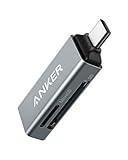
Anker SD Card Reader, 2-in-1 USB C Memory Card Reader for Digital Camera SD Card Viewer with Dual Slot for SDXC, SDHC, SD, MMC, RS-MMC, Micro SDXC,MicroSD, Micro SDHC Card, and UHS-I Cards
