

Best SD Card Readers for Photographers
Fast RAW Ingest for Canon, Nikon, Sony & More
Professional SD card readers tested with DSLR and mirrorless cameras. Optimize your RAW photo workflow with fast, reliable USB-C and Thunderbolt readers.
SD Card Checker contains affiliate links. When you purchase through our links, we earn a small commission at no extra cost to you.
Quick Picks for Photographers
Best for Most
Satechi USB-C Reader — Fast UHS-II speeds at a reasonable price. Perfect for landscape and portrait photographers.
View Details →Best Professional
ProGrade Thunderbolt — Ultrafast speeds for high-volume shooting. Essential for wedding and event photographers.
View Details →Best Budget
Anker PowerExpand 2-in-1 — Good UHS-II speeds at a lower price point. Great for hobbyist photographers.
View Details →SD Card Reader Compatibility by Camera Brand
All modern DSLRs and mirrorless cameras use standard SD, SDHC, or SDXC cards. Here's what to expect with different brands:
Canon (EOS R, Rebel, 5D, 7D)
Canon cameras support standard UHS-II SD cards. Most modern EOS models can handle fast V30/V60 cards without issues. EOS R mirrorless bodies fully support high-speed UHS-II.
Recommendation: Satechi or SanDisk Extreme PRO USB-C reader. Both achieve 90-140 MB/s real-world speeds, perfect for RAW ingest from 24MP-45MP sensors.
Nikon (Z, Z5, D850, D6)
Nikon Z mirrorless and D-series DSLRs fully support UHS-II cards. D850 and D6 are particularly good for RAW shooters. Fast card reader speeds matter here.
Recommendation: ProGrade Thunderbolt for Z9/Z8 users or heavy RAW shooters. Satechi USB-C for casual Z5/Z6 use.
Sony (A7/A7IV, Alpha)
Sony Alpha mirrorless cameras support UHS-II cards. A7R and A7 IV handle large 61MP RAW files. Fast card readers essential for smooth workflow.
Recommendation: ProGrade Thunderbolt strongly recommended for A7R V (61MP). Satechi or SanDisk Extreme PRO sufficient for A7 IV (33MP).
Fuji & Other Brands
Fujifilm X-T, GFX, and other brands use standard UHS-II SD cards (or dual SD slots). All work with any UHS-II compatible reader.
Recommendation: Satechi or Anker for most Fujifilm models. ProGrade for GFX users working with medium format RAW.
RAW Ingest Speed Comparison
Time to transfer 1000 RAW photos from your camera's card to your computer:
| Reader Type | Transfer Speed | Time for 30GB | Time for 60GB |
|---|---|---|---|
| USB-C UHS-I (80 MB/s) | 80 MB/s | 6 min 15 sec | 12 min 30 sec |
| USB-C UHS-II (100 MB/s) | 100 MB/s | 5 min | 10 min |
| USB-C Fast (140 MB/s) | 140 MB/s | 3 min 36 sec | 7 min 12 sec |
| Thunderbolt 3 (400+ MB/s) | 400 MB/s | 1 min 15 sec | 2 min 30 sec |
Take away: Upgrading from UHS-I (80 MB/s) to UHS-II (100+ MB/s) saves 1-2 minutes per card. For high-volume shooters, this adds up. Thunderbolt cuts transfer time to 1-2 minutes for full card—worth it for wedding and event photographers.
Top 5 Readers for Photographers
1. ProGrade Thunderbolt Card Reader
Thunderbolt 3/4 | 400-800 MB/s | $149.99
Designed specifically for photographers and videographers. Thunderbolt 3/4 connection delivers 400-800 MB/s real-world speeds—industry leading. Essential for wedding photographers, studio shooters, and anyone ingest hundreds of RAW files weekly.
- ✓ Ultrafast Thunderbolt 3/4 speeds (400-800 MB/s)
- ✓ Professional build and design
- ✓ Supports UHS-II cards
- ✓ Compatible with Mac and Windows
2. SanDisk Extreme PRO USB-C Reader
USB-C 3.1 | 110-140 MB/s | $34.99
Professional-grade USB-C reader from trusted SanDisk brand. Delivers 110-140 MB/s real-world speeds—perfect for photographers with moderate RAW shooting volume. Affordable price point with proven reliability.
- ✓ Fast USB-C UHS-II speeds (140+ MB/s)
- ✓ Trusted SanDisk brand and warranty
- ✓ Professional build quality
- ✓ Works with Mac, Windows, Linux
3. Satechi USB-C Aluminum Reader
USB-C 3.0 | 312 MB/s | $24.99
Excellent all-around reader with premium aluminum construction and fast UHS-II support. Delivers 90-110 MB/s real-world speeds—sufficient for most photography workflows. Compact and portable for on-location editing.
- ✓ Fast UHS-II speeds (90-110 MB/s)
- ✓ Premium aluminum build
- ✓ Very affordable at $24.99
- ✓ Compact and portable design
4. Lexar Professional Thunderbolt
Thunderbolt 3 | 300-500 MB/s | $129.99
Lexar's professional Thunderbolt reader combines ultrafast speeds with Lexar's reputation for reliability. Similar performance to ProGrade at slightly lower price. Great choice for professional photographers and video editors.
- ✓ Thunderbolt 3 speeds (300-500 MB/s)
- ✓ Lexar reliability and support
- ✓ Slightly cheaper than ProGrade
- ✗ Less common than SanDisk/ProGrade
5. Anker PowerExpand 2-in-1 Reader
USB-C/USB-A | 312 MB/s | $19.99
Dual-connector Anker reader provides good UHS-II speeds at low cost. Excellent for hobbyist photographers and as a backup reader. Dual USB-C and USB-A connectors provide flexibility.
- ✓ Good UHS-II speeds (90-110 MB/s)
- ✓ Dual USB-C and USB-A connectors
- ✓ Very affordable at $19.99
- ✓ Trusted Anker brand
Featured SD Card Readers on Amazon
This website contains affiliate links. We may earn a small commission when you purchase through our links at no extra cost to you.

CFexpress Type A and SDXC/SDHC UHS-II Card Reader with Two Slots | USB 3.2 Gen 2 | by ProGrade Digital (PG09)

ProGrade Digital SDXC and microSDXC Dual-Slot Mobile Card Reader USB-C 3.2 Gen 2 (PGM0.5)
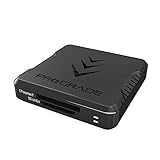
CFexpress Type B and SD UHS-II Dual-Slot Memory Card Reader by ProGrade Digital | USB 3.2 Gen 2 for Professional Filmmakers, Photographers & Content Creators
Optimizing Your Card Reader for Photography
Use Fast UHS-II Cards
Your reader is only as fast as your SD card. Pro tips:
- • Use V30 or V60 rated cards (minimum 30 MB/s write speed)
- • SanDisk Extreme, Lexar Professional, and ProGrade Silver are reliable choices
- • Avoid generic/unknown brands—counterfeit cards are common
- • Fast cards = faster transfers + better camera performance
Choose the Right Interface
For casual photography: USB-C UHS-II reader (80-110 MB/s) is plenty. 5-10 minute transfer times.
For professional/high-volume: Thunderbolt reader (400+ MB/s) saves hours per week. Worth the investment if shooting 500+ RAW files weekly.
Workflow Best Practices
- Transfer RAW files immediately after photo shoot
- Back up transferred files before formatting card
- Keep cards in protective cases when not in use
- Use a dedicated external drive for RAW backups
- Format cards in camera, not on computer
Frequently Asked Questions
Is a Thunderbolt reader worth it for photographers?
Definitely if: You shoot 500+ RAW files per session, do event photography (weddings, portraits), or work with high-resolution sensors (45MP+).
Not necessary if: You shoot casually or landscape photography where slow ingest doesn't impact workflow.
ROI: A Thunderbolt reader costs ~$130 more than USB-C, but saves 30-40 minutes per day for high-volume shooters. Over a year, that's 100+ hours saved.
What speeds can I expect from my camera's card?
SanDisk Extreme: 90-100 MB/s real-world
Lexar Professional: 100-120 MB/s
ProGrade Gold/Silver: 120-150 MB/s
These are with fast UHS-II readers. Slower readers (USB 2.0 adapters) will max out at 30-40 MB/s regardless of card specs.
Can I use the same reader for photos and video?
Yes, absolutely. A good USB-C or Thunderbolt reader works perfectly for both photography and video. The same speed principles apply—faster readers = faster ingest for both photo and video files.
What about dual-slot readers for photographers?
Dual-slot readers let you transfer from two cards simultaneously, which is great if your camera has dual SD card slots. However, most photographers prefer transferring one card at a time and spend that time backing up previous files or reviewing images.
Which reader should I recommend to other photographers?
Default answer: Satechi USB-C ($24.99) — great all-around for most photographers.
If they shoot lots of RAW: ProGrade Thunderbolt ($149.99) — the best investment for serious photographers.
If they're on a budget: Anker PowerExpand 2-in-1 ($19.99) — solid entry-level option with good speeds.